
Replace some or all teeth
Partial and complete dentures address different patterns of missing teeth.
Explore removable options for missing teeth, with a discussion of eating, speech, comfort and ongoing care.
A consultation to understand your options. A decision at your pace.
Your treatment plan is based on your examination and goals.
You do not need to know the name of a treatment before asking about your teeth.
Discuss the number and position of gaps and the health of your remaining teeth.
An assessment helps explain the available support and realistic expectations for a complete denture.
A changing fit deserves review rather than repeated self-adjustment.
Arrange an assessment and bring damaged pieces if you have them.
Explain your dental history and daily difficulties, and have your teeth and gums examined.
Measurements and impressions or appropriate records help plan the shape and fit.
The proposed denture is assessed and fitted through an agreed sequence of appointments.
Practise using the denture and attend follow-up for fit, comfort and care advice.

Your dental team
M.D.S. · Prosthodontist
Visiting consultant
Care is planned with the relevant member of the dental team.
Assessment and planning for removable tooth replacement, fit and everyday care.
Meet the teamDentures replace missing teeth and sit over the gums; some partial designs also attach to remaining teeth. A complete denture replaces the teeth in an upper or lower arch, while a partial denture replaces some missing teeth.
Choosing a denture involves more than its appearance. Talk about eating, speaking, comfort and your ability to handle and clean it. Bring an existing denture if you have one so you can explain what works and what you would like assessed.
Dentures replace missing teeth and sit over the gums; some partial designs also attach to remaining teeth. A complete denture replaces the teeth in an upper or lower arch, while a partial denture replaces some missing teeth.
Choosing a denture involves more than its appearance. Talk about eating, speaking, comfort and your ability to handle and clean it. Bring an existing denture if you have one so you can explain what works and what you would like assessed.
Your examination helps us recommend the options that suit you.
Your examination helps us recommend the options that suit you.
Discuss how to practise eating and speaking while adapting, rather than expecting an immediate familiar feel.
Use the cleaning method recommended for its materials. Care for your gums and any remaining teeth too.
Report pressure spots or slipping. Do not bend, file or glue a denture yourself.
Discuss how to practise eating and speaking while adapting, rather than expecting an immediate familiar feel.
Use the cleaning method recommended for its materials. Care for your gums and any remaining teeth too.
Report pressure spots or slipping. Do not bend, file or glue a denture yourself.
These answers are a starting point. Your consultation is where we discuss your individual situation.
They are generally removed at night unless your dentist gives different instructions. Confirm a suitable storage routine.
Ask for material-specific advice. Abrasive toothpaste can damage some denture surfaces.
The mouth and supporting tissues can change. A dental examination helps establish the reason.
Follow-up may be needed as you adapt or your mouth changes. Report persistent soreness.
Immediate options may be considered, but healing can change fit. Ask about the longer-term plan.
Dentures may initially feel bulky or affect speech and chewing. Poor fit or inadequate cleaning can contribute to soreness and infection. Mouth shape can change, so adjustments, relining or replacement may be needed over time. Discuss these possibilities before choosing treatment.
Request an appointment from Grin & Brace to discuss arranging a dental consultation in Shela, Ahmedabad.
Prefer to speak to the clinic?
+91 93164 52768 ↗C-231, Swati Trinity,
Applewoods Township,
Nr. Shantipura Circle, Shela,
Ahmedabad – 380054
Monday–Saturday
10:30 AM–7:30 PM
Sunday: by appointment
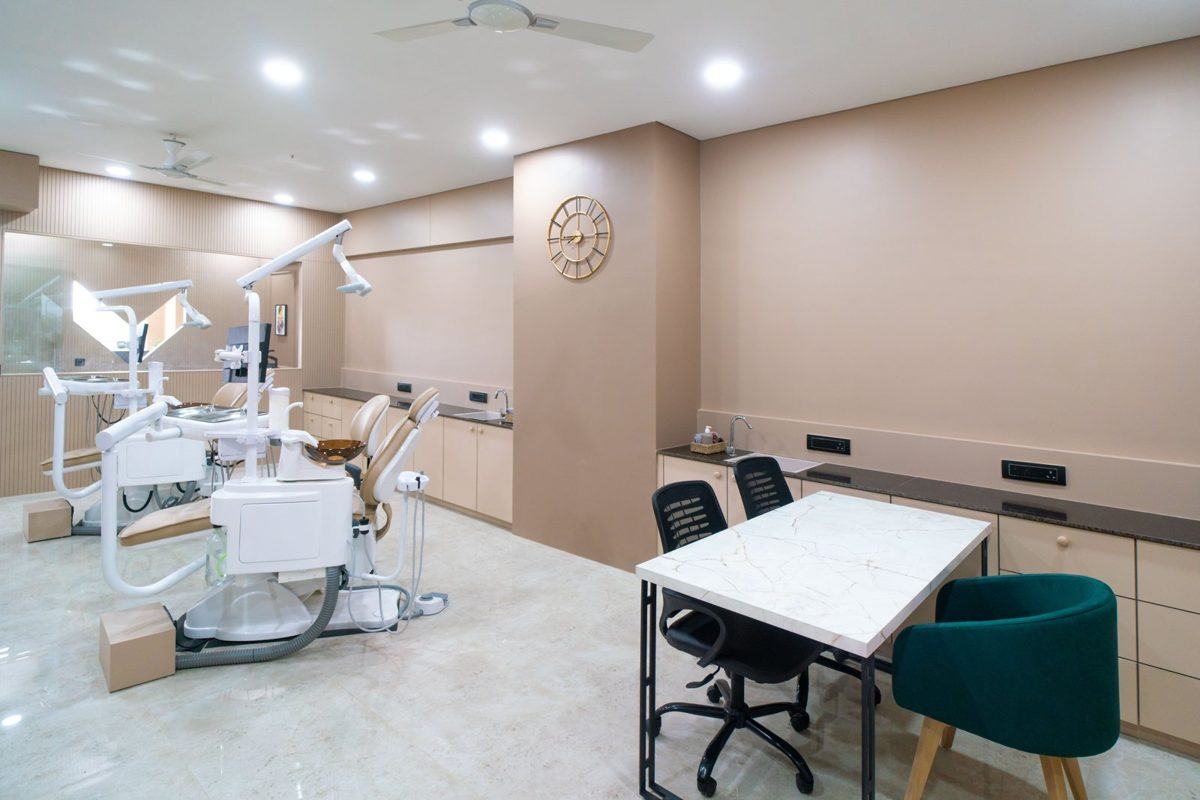
General patient information; treatment recommendations depend on a clinical examination.